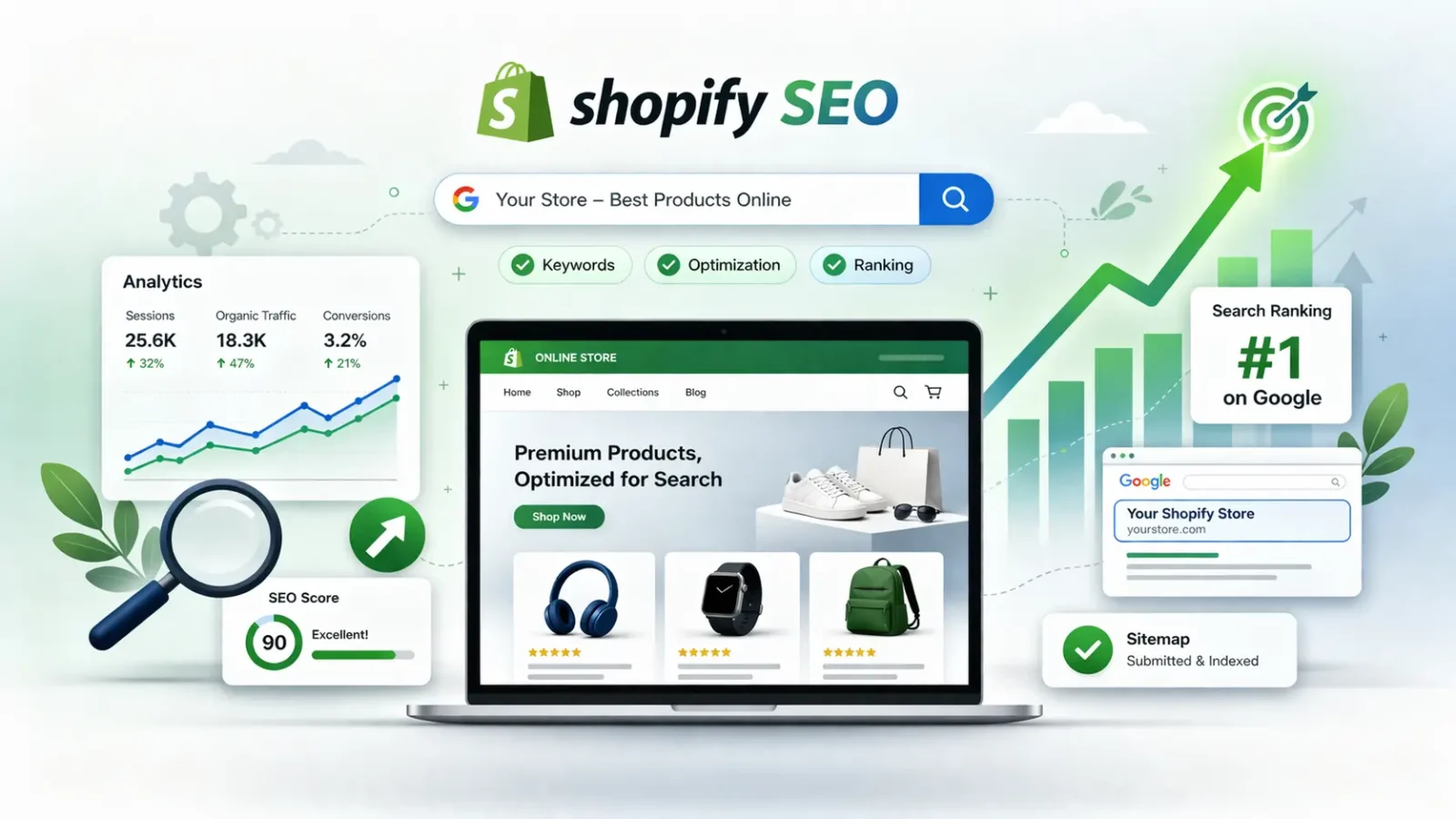
Search engine optimization plays a critical role in the success of any online store. No matter how well your Shopify store is designed, it will struggle to generate sales if customers cannot find it on search engines.
This complete Shopify SEO guide for 2026 will help you understand how to optimize your store step by step. From basic setup to advanced strategies, this guide covers everything you need to improve rankings, increase traffic, and grow your business.
Understanding Shopify SEO
Shopify SEO refers to the process of optimizing your Shopify store so that it ranks higher on search engines like Google. This involves improving your website structure, content, keywords, and technical performance.
Unlike traditional websites, Shopify stores require a balance between product optimization and content strategy. You are not only optimizing pages, but also products, collections, and user experience.
Keyword Research for Shopify Stores
Every successful SEO strategy starts with keyword research. Choosing the right keywords helps you attract the right audience who are actively searching for your products.
Start by identifying:
– Product-based keywords (e.g., leather shoes for men)
– Category keywords (e.g., best running shoes)
– Informational keywords (e.g., how to choose running shoes)
Use tools like Google Keyword Planner or Ahrefs to find keywords with good search volume and moderate competition.
Focus on long-tail keywords because they are easier to rank and often have higher conversion rates.
Optimizing Product Pages
Product pages are the core of your Shopify store. Optimizing them properly can significantly improve your search rankings.
Make sure each product page includes:
– Unique product title with keywords
– Detailed product description
– High-quality images with alt text
– Clear pricing and availability
– Customer reviews
Avoid copying product descriptions from suppliers. Duplicate content can negatively impact your SEO.
Optimizing Collection Pages
Collection pages target broader keywords and play a major role in ranking.
To optimize collection pages:
– Add a keyword-rich title
– Write a short description at the top or bottom
– Use internal links to products
– Keep URL structure clean
Collection pages help search engines understand your site structure and improve navigation.
Technical SEO for Shopify
Technical SEO ensures that your website is easy for search engines to crawl and index.
Important areas include:
– Fast loading speed
– Mobile responsiveness
– Clean URL structure
– Proper use of heading tags
– XML sitemap submission
Shopify handles many technical aspects automatically, but you still need to optimize images, apps, and themes to maintain performance.
Content Marketing for Shopify SEO
Adding a blog to your Shopify store can significantly boost your SEO.
Content helps you target informational keywords and bring in organic traffic.
Examples of blog topics:
– Buying guides
– Product comparisons
– Industry trends
– How-to articles
Regular blogging builds authority and increases your chances of ranking for multiple keywords.
On-Page SEO Best Practices
On-page SEO focuses on optimizing individual pages.
Key elements include:
– Title tags with primary keywords
– Meta descriptions that attract clicks
– Proper use of headings (H1, H2, H3)
– Internal linking between pages
– Image optimization
Each page should have a clear focus keyword and structured content.
Building Backlinks
Backlinks are links from other websites to your store. They are one of the strongest ranking factors in SEO.
Ways to build backlinks:
– Guest blogging
– Collaborations with influencers
– Business directories
– Creating valuable content
Focus on quality over quantity. A few strong backlinks are better than many low-quality ones.
Improving User Experience
User experience directly impacts SEO performance. Google considers how users interact with your site.
Improve user experience by:
– Making navigation simple
– Reducing page load time
– Using clear call-to-actions
– Ensuring mobile optimization
A better user experience leads to higher engagement and lower bounce rates.
Tracking and Measuring Results
SEO is an ongoing process. You need to track performance and make improvements over time.
Use tools like Google Analytics and Google Search Console to monitor:
– Traffic growth
– Keyword rankings
– Click-through rates
– Conversion rates
Analyzing data helps you understand what works and what needs improvement.
Common Shopify SEO Mistakes
Many store owners make mistakes that limit their SEO performance.
Common mistakes include:
– Using duplicate content
– Ignoring mobile optimization
– Overloading with apps
– Not optimizing images
– Skipping keyword research
Avoiding these mistakes can significantly improve your results.
Conclusion
Shopify SEO is not a one-time task but a continuous process. By focusing on keyword research, content optimization, technical performance, and user experience, you can build a strong foundation for long-term growth.
With the right strategy, your Shopify store can rank higher on Google, attract more traffic, and generate consistent sales.
Need Help with Shopify SEO?
If you want to improve your store’s visibility and drive more organic traffic, working with experienced professionals can help you achieve better results faster.
A well-optimized store not only ranks better but also converts visitors into customers effectively.