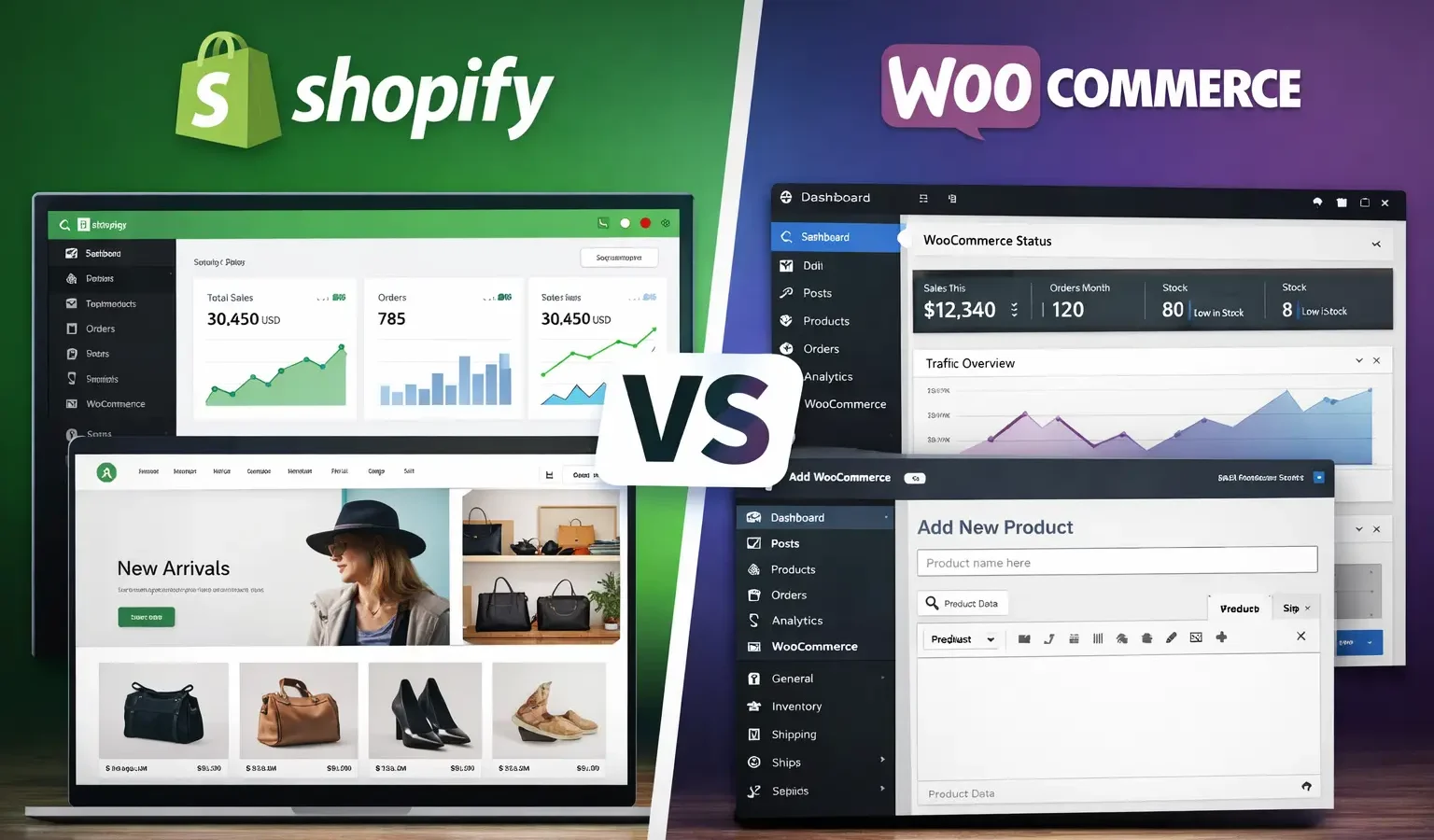
Choosing the right eCommerce platform is one of the most important decisions for any online business. Two of the most popular options available today are Shopify and WooCommerce. Both platforms are powerful, flexible, and widely used, but they differ significantly in how they work and what they offer.
In this detailed comparison, we will analyze Shopify vs WooCommerce based on usability, pricing, design, SEO, performance, and scalability so you can choose the best platform for your business in 2026.
What is Shopify?
Shopify is a fully hosted eCommerce platform that allows you to build and manage an online store without worrying about technical aspects like hosting, security, or maintenance. It provides an all-in-one solution where everything is managed for you.
With Shopify, users can quickly set up a store, add products, manage orders, and accept payments through an easy-to-use interface.
What is WooCommerce?
WooCommerce is an open-source eCommerce plugin built for WordPress. Unlike Shopify, it is not a standalone platform. Instead, it requires you to set up a WordPress website, choose hosting, and install additional plugins for extended functionality.
This makes WooCommerce highly flexible but also more technical to manage.
Ease of Use
Shopify is designed for simplicity. It provides a clean dashboard, guided setup, and requires no coding knowledge. Users can launch a store within a short time.
WooCommerce, on the other hand, requires more effort. You need to manage hosting, install WordPress, configure plugins, and handle updates manually.
For beginners or non-technical users, Shopify is generally easier to use.
Pricing Comparison
Shopify offers subscription-based pricing starting at approximately ₹2,000 per month. This includes hosting, security, and platform maintenance.
WooCommerce itself is free, but additional costs include hosting, domain, premium themes, and plugins. These costs can vary depending on your requirements.
While WooCommerce may appear cheaper initially, the total cost can increase over time.
Design and Customization
Shopify provides professionally designed themes that are easy to customize. However, deep customization may be limited compared to open-source platforms.
WooCommerce offers unlimited customization since you have full control over the code. This flexibility makes it ideal for businesses with specific design or functionality needs.
SEO Capabilities
WooCommerce has strong SEO capabilities due to its integration with WordPress. Plugins like Yoast SEO allow advanced optimization, including meta tags, schema, and content analysis.
Shopify includes built-in SEO features and clean code structure but offers less control compared to WordPress.
For content-driven strategies, WooCommerce provides more flexibility.
Performance and Speed
Shopify is optimized for performance with fast loading speeds, reliable hosting, and built-in CDN support. Users do not need to worry about technical optimization.
WooCommerce performance depends heavily on your hosting provider and configuration. Poor hosting or too many plugins can affect speed.
Security and Maintenance
Shopify handles all security aspects including SSL certificates, updates, and protection against threats. This makes it a secure and hassle-free option.
WooCommerce requires manual updates, security plugins, and monitoring. Users are responsible for maintaining their website.
Scalability
Shopify is designed for scalability and can handle large traffic and high-volume sales without additional configuration.
WooCommerce can also scale, but it requires better hosting infrastructure and technical optimization as your business grows.
Final Verdict
Shopify is the better choice for businesses looking for an easy-to-use, reliable, and scalable solution without technical complexity.
WooCommerce is ideal for users who want full control, customization, and advanced SEO capabilities, and who are comfortable managing the technical side.
Conclusion
Both Shopify and WooCommerce are excellent platforms, but the right choice depends on your business goals, budget, and technical expertise.
If you prefer simplicity and speed, Shopify is a strong option. If you value flexibility and control, WooCommerce may be more suitable.
Before making a decision, evaluate your long-term goals and choose a platform that aligns with your growth strategy.
Need Professional Help?
If you are planning to build or migrate your online store, working with experienced developers can save time and ensure better results. A well-built store not only looks good but also performs efficiently and converts visitors into customers.