Customers Shop Everywhere
Modern consumers discover products across dozens of touchpoints — social media, search engines, marketplaces, and physical stores. Multi-channel selling meets customers where they are, diversifies revenue sources, and reduces dependence on any single channel. Our strategy team helps brands build profitable multi-channel operations.
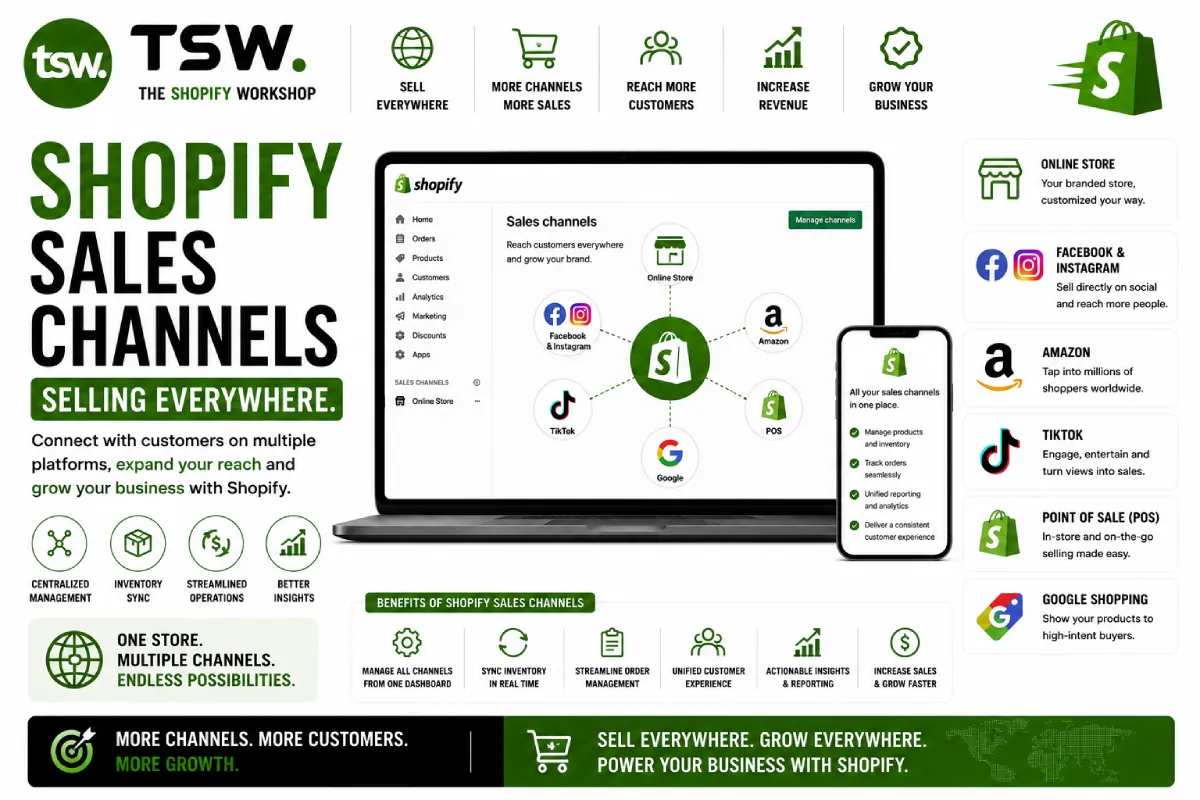
Available Shopify Sales Channels
Online Store
Your primary channel — a custom Shopify theme that represents your brand fully. This is where you have maximum control over pricing, experience, and customer relationship. Drive traffic through SEO, PPC, and marketing.
Amazon
The world’s largest marketplace with built-in buyer intent. Shopify’s Amazon integration syncs products and inventory. Use Amazon for discovery and volume while building your direct store for margin and brand control.
Instagram and Facebook Shops
Shopify syncs your product catalogue with Meta’s commerce platform. Customers browse and buy directly within Instagram and Facebook. Tag products in posts and Stories for seamless social commerce.
TikTok Shop
Rapidly growing sales channel, especially for younger demographics. Shoppable videos, live shopping events, and in-app checkout. TikTok’s algorithm surfaces products to interested users regardless of follower count.
Google and YouTube
Sync products with Google Merchant Center for Shopping ads, free product listings, and YouTube Shopping. Reach high-intent searchers and video viewers with product-linked content.
Shopify POS
For physical retail — pop-up shops, markets, and permanent stores. Unified inventory and customer data across online and offline channels. Customers can buy online and return in-store, or browse in-store and buy online.
Multi-Channel Inventory Management
The biggest challenge of multi-channel selling is inventory synchronisation. Overselling creates refunds, negative reviews, and customer frustration. Use Shopify as the inventory source of truth and ensure all channels sync in real-time. Our integration solutions maintain inventory accuracy across channels.
Channel-Specific Pricing
Different channels have different fee structures and competitive dynamics. Marketplace prices may need to be higher to cover referral fees. Direct store prices can be lower since you keep the full margin. Manage pricing strategy per channel while maintaining brand consistency.
Measuring Channel Performance
- Revenue per channel: Absolute and as percentage of total
- Profit per channel: Revenue minus channel fees and associated costs
- Customer acquisition cost: By channel — some channels acquire customers cheaply who then buy direct
- Return rate by channel: Marketplace customers may return more frequently
- Cross-channel customer behaviour: Do marketplace customers convert to direct buyers?
Ready to sell everywhere? Build your multi-channel strategy with our team.