Influencer Marketing for Ecommerce in 2026
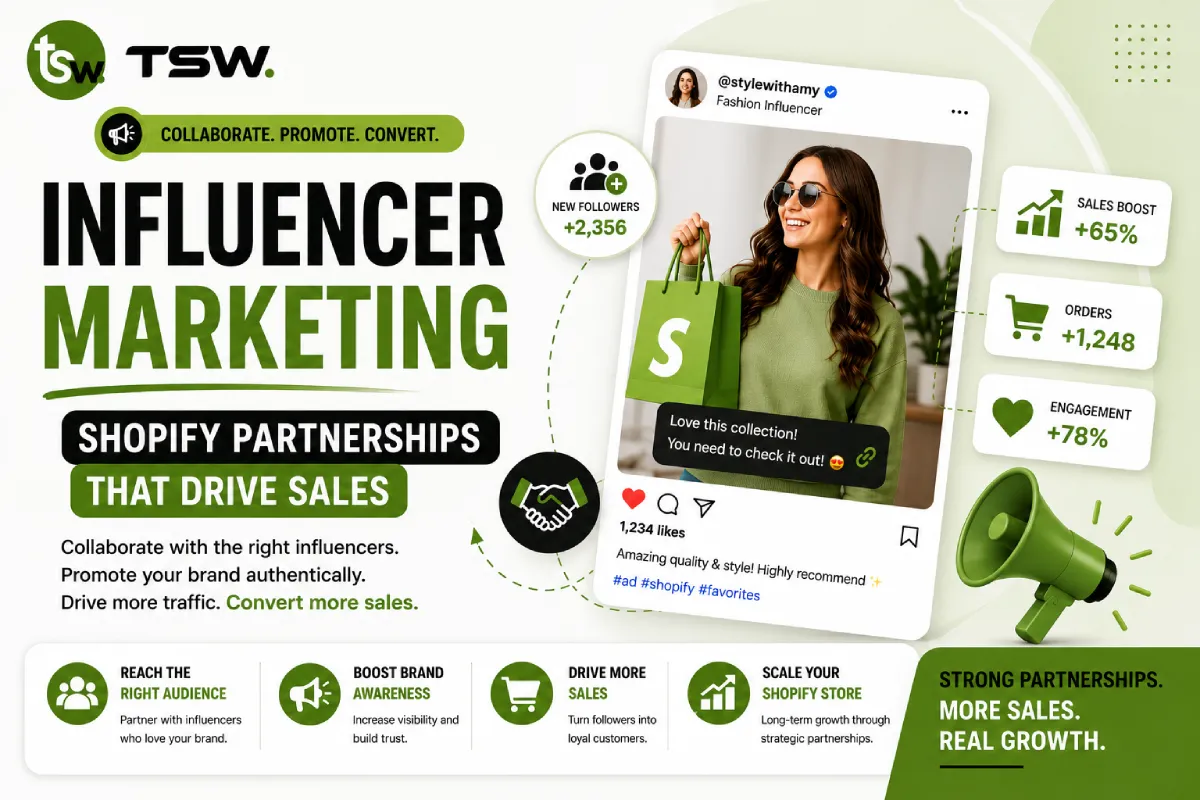
Influencer marketing has matured from experimental to essential for ecommerce brands. Consumers trust recommendations from people they follow more than traditional advertising. The key is finding the right creators, structuring deals that align incentives, and measuring actual revenue impact. Our marketing team manages influencer programmes end-to-end.
Types of Influencers
Nano Influencers (1K-10K followers)
Highest engagement rates and most authentic connections with their audience. Affordable — often work for free products or small fees. Best for local businesses, niche markets, and building early social proof.
Micro Influencers (10K-100K followers)
The sweet spot for most Shopify stores. Large enough to drive measurable traffic but small enough for genuine audience relationships. Typically deliver the best ROI in terms of cost per conversion.
Macro and Mega Influencers (100K+)
Deliver reach and awareness at scale. More expensive and potentially lower engagement rates. Best for product launches, brand awareness campaigns, and reaching new market segments.
UGC Creators
Professional content creators who produce high-quality photos and videos for your brand without necessarily posting to their own audience. Use their content for your paid ads, website, and social media. Often more cost-effective than influencer posts.
Finding the Right Partners
Audience Alignment
The influencer’s audience demographics must match your target customer. A beauty influencer with young female followers suits a skincare brand; an automotive influencer suits car accessories. Verify audience demographics using creator analytics platforms.
Content Quality and Brand Fit
Review their content style, production quality, and values. Ensure brand alignment — a luxury brand should not partner with creators who frequently promote budget alternatives. Authenticity requires genuine fit between brand and creator.
Structuring Partnerships
Compensation Models
- Flat fee: Fixed payment per post or content piece
- Commission/Affiliate: Percentage of sales generated (tracked via discount codes or affiliate links)
- Product seeding: Free products in exchange for content (nano influencers)
- Hybrid: Base fee plus commission — aligns incentives with performance
Content Requirements
Be clear about deliverables — number of posts, Stories, Reels, usage rights, and timeline. However, give creators freedom in execution. Overly scripted content feels inauthentic and underperforms. The best results come when creators integrate your product naturally.
Shopify Integration
Discount Codes and Tracking
Create unique discount codes for each influencer. This tracks direct sales attribution and gives the influencer’s audience an incentive to purchase. Use Shopify’s discount analytics to measure redemption rates and revenue.
Affiliate Programmes
Set up an affiliate programme using apps like Refersion, GoAffPro, or UpPromote. Influencers get personal referral links with automatic commission tracking. This scales your programme without manual sales attribution.
Landing Pages
Create dedicated landing pages for influencer campaigns using your Shopify theme. Personalised pages featuring the influencer’s endorsement convert better than sending traffic to your homepage.
Measuring Influencer ROI
- Direct revenue: Sales attributed through discount codes and affiliate links
- Traffic: Website visits from influencer referrals (UTM parameters)
- Content value: Quality of content received for repurposing in ads and on-site
- Brand awareness: Reach, impressions, and new follower acquisition
- Customer lifetime value: Do influencer-acquired customers have higher or lower LTV?
Ready to launch an influencer programme? Partner with our marketing team for creator strategy and management.