Why SEO Matters for Shopify Stores
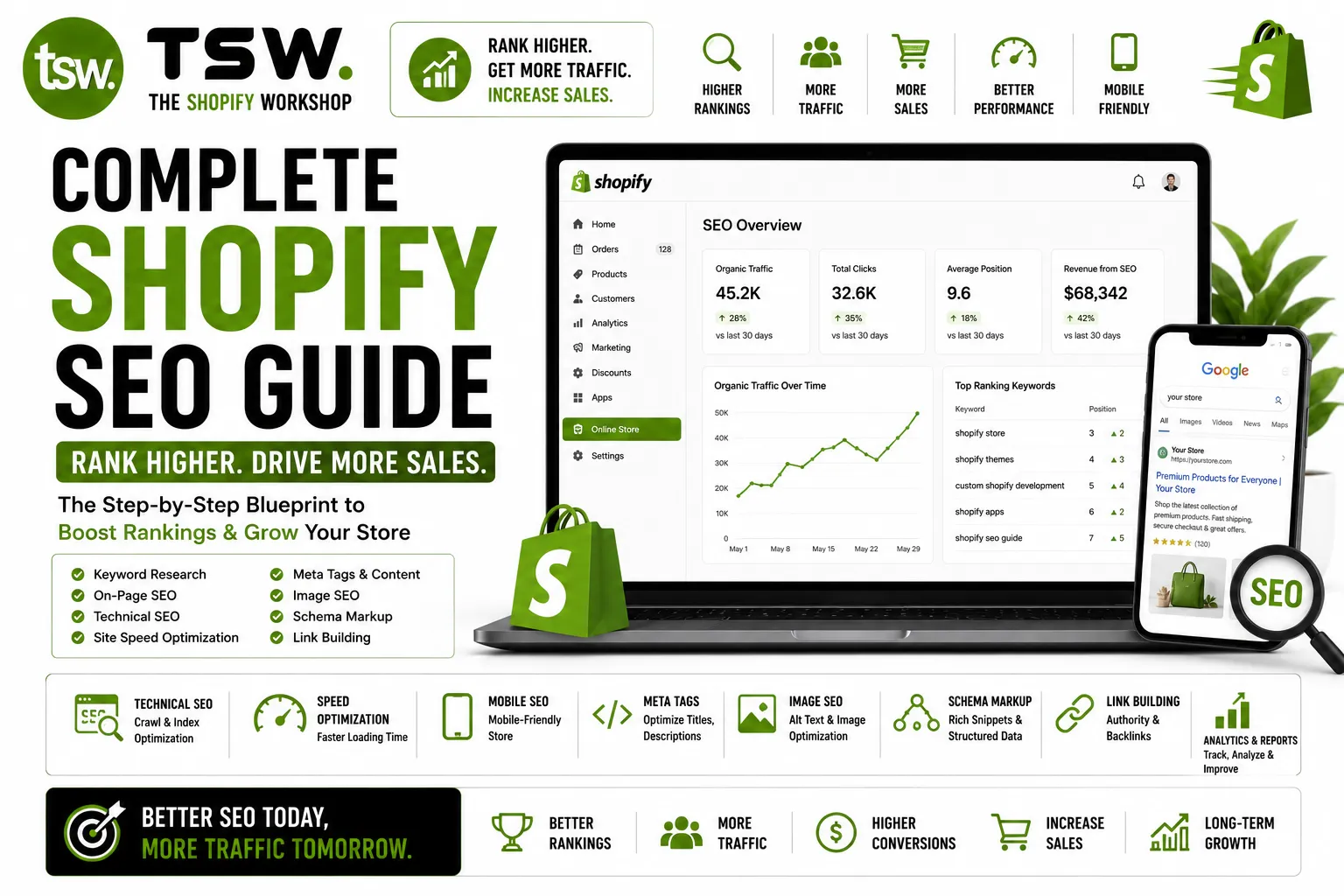
Organic search drives 30-40% of ecommerce revenue for well-optimised stores. Unlike paid advertising, SEO compounds over time — every piece of optimised content and every quality backlink continues working for months and years. Our Shopify SEO services help stores achieve sustainable organic growth.
Technical SEO Foundations
Site Speed and Core Web Vitals
Google uses Core Web Vitals as a ranking factor. Key metrics include Largest Contentful Paint (LCP), Cumulative Layout Shift (CLS), and Interaction to Next Paint (INP). Our speed optimisation service focuses on achieving green scores across all vitals.
Site Structure and Navigation
Organise products into logical collections with clear hierarchy. Use breadcrumbs, internal linking, and a flat URL structure. Every important page should be reachable within three clicks from the homepage.
Schema Markup and Structured Data
Implement Product, Review, FAQ, Organization, and BreadcrumbList schema. Structured data helps Google display rich snippets in search results, increasing click-through rates by up to 30%. Use Google’s Rich Results Test to validate.
Canonical URLs and Duplicate Content
Shopify generates multiple URLs for the same product through collections. Ensure canonical tags point to the primary URL and that your sitemap only includes canonical versions.
On-Page Optimisation
Title Tags and Meta Descriptions
Write unique, keyword-rich title tags under 60 characters and meta descriptions under 155 characters for every product, collection, and page. Include your primary keyword naturally and add a compelling call to action.
Product Page Optimisation
- Unique descriptions: Never use manufacturer copy — write original, benefit-focused descriptions
- Image alt text: Descriptive alt attributes on every product image
- Internal linking: Link to related products, collections, and blog content
- User reviews: Social proof improves engagement metrics that influence rankings
Content Marketing Strategy
A blog targeting informational keywords drives top-of-funnel traffic. Create buying guides, comparison posts, how-to articles, and industry insights. Each piece should link to relevant product collections and service pages like our ecommerce strategy offerings.
Off-Page SEO and Link Building
Build authority through guest posting, digital PR, supplier partnerships, and creating linkable assets like research reports or free tools. Focus on earning links from relevant industry publications rather than generic directories.
Measuring SEO Success
Track organic traffic, keyword rankings, conversion rate from organic visitors, and revenue attributed to SEO. Use Google Search Console for technical insights and GA4 for user behaviour analysis. Regular SEO audits identify new opportunities and fix emerging issues.
Want to improve your store’s organic visibility? Request a free SEO audit from our team.