The Platform Debate in 2026
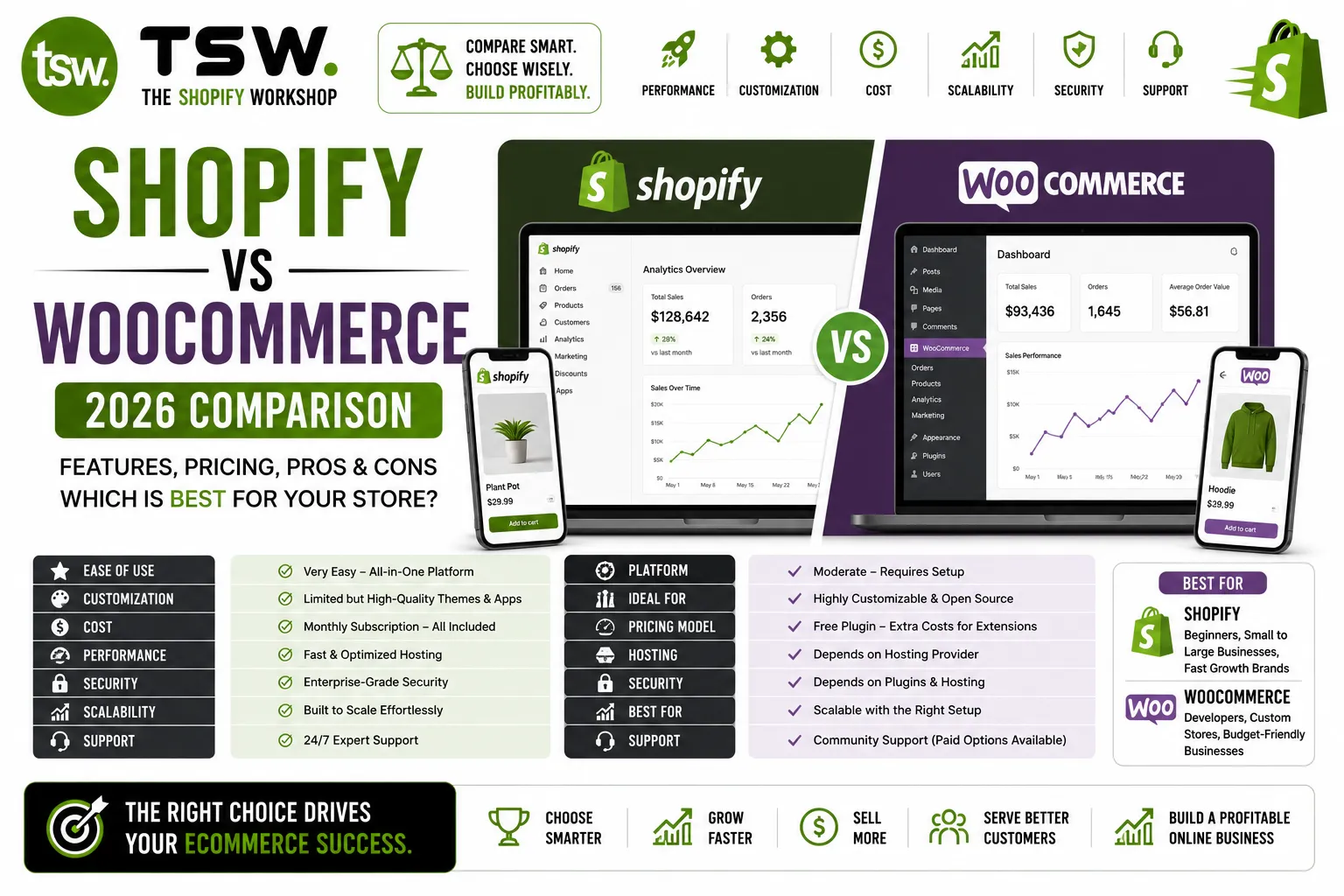
Shopify and WooCommerce remain the two dominant ecommerce platforms, but the gap has widened significantly. While WooCommerce suits certain use cases, Shopify has pulled ahead for most serious ecommerce businesses. Here is an honest analysis of both.
Ease of Use and Setup
Shopify: Ready in Hours
Shopify is a fully hosted platform — no servers to configure, no software to install, no security patches to manage. You can have a functioning store within hours using a theme from the Shopify Theme Store or a custom-built theme.
WooCommerce: WordPress Flexibility, WordPress Complexity
WooCommerce requires WordPress hosting, SSL certificates, plugin management, database optimisation, and ongoing security monitoring. The flexibility is powerful but comes with significant maintenance overhead.
Performance and Speed
Shopify’s CDN and optimised infrastructure deliver consistently fast load times globally. WooCommerce performance depends entirely on your hosting provider, theme quality, and plugin stack — many stores suffer from slow speeds due to poorly optimised setups. Our speed optimisation service ensures maximum performance.
Scalability
Shopify handles traffic spikes automatically — flash sales, viral moments, and holiday rushes work seamlessly. WooCommerce stores often crash under heavy load unless running on expensive managed WordPress hosting with proper caching layers.
Security
Shopify includes PCI DSS Level 1 compliance, automatic security updates, and DDoS protection out of the box. WooCommerce store owners are responsible for their own security — plugin vulnerabilities, outdated WordPress versions, and weak hosting configurations are common attack vectors.
Total Cost of Ownership
While WooCommerce is “free” to install, the real costs add up: premium hosting ($30-300/mo), premium plugins ($200-2,000/year), security solutions, and developer time for maintenance. Shopify’s all-inclusive pricing is often more cost-effective when you factor in total ownership costs.
When WooCommerce Still Makes Sense
- Content-heavy sites where blogging is the primary function and commerce is secondary
- Highly custom data structures that benefit from WordPress’s flexible post type system
- Existing WordPress ecosystems with deep plugin integrations
When to Choose Shopify
- Ecommerce-first businesses focused on selling products
- Brands wanting minimal technical maintenance
- Companies planning to scale rapidly
- Businesses needing reliable uptime and security
Considering a move from WooCommerce to Shopify? Our migration team handles the entire transition seamlessly. Get started today.