The State of Dropshipping in 2026
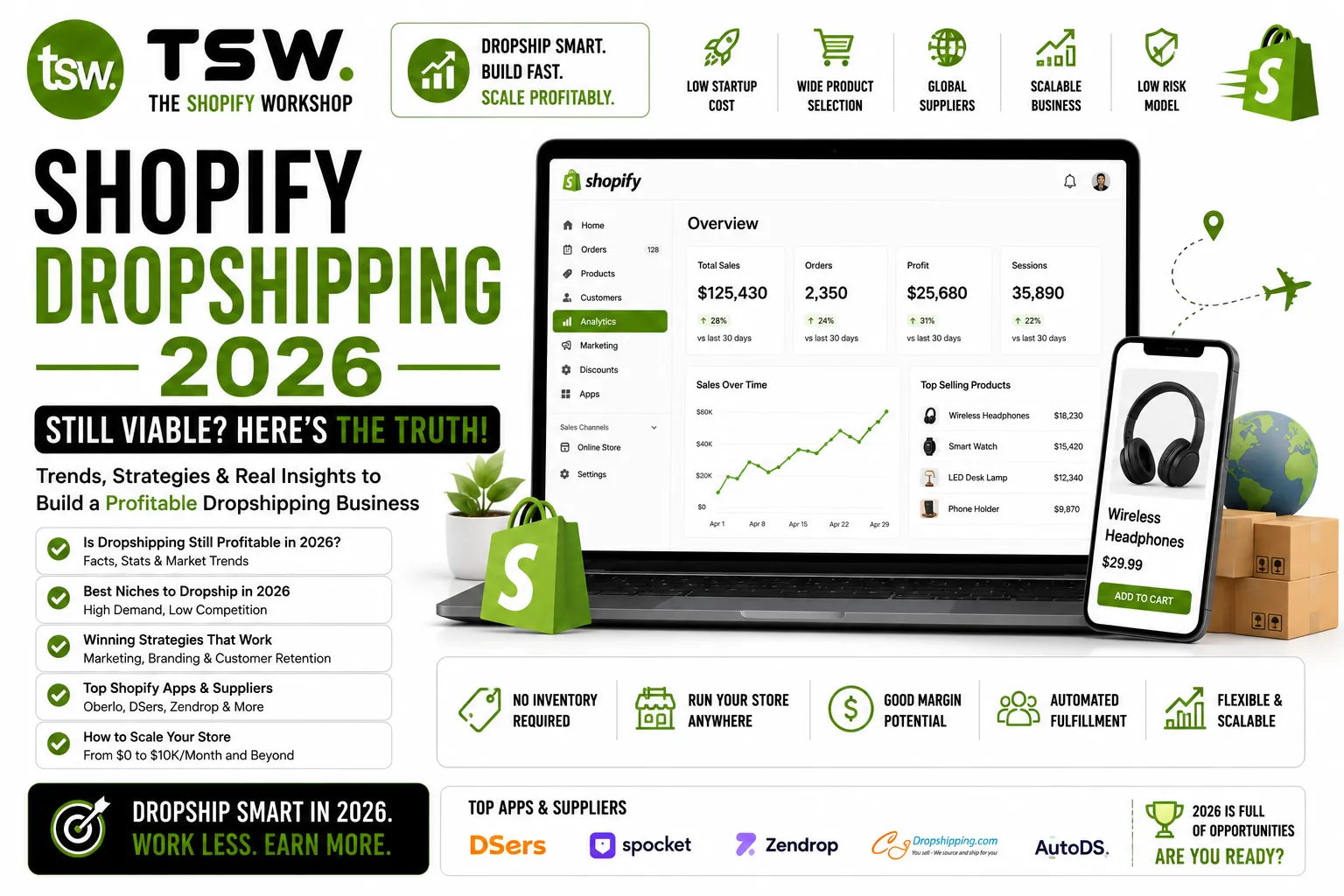
Dropshipping has evolved significantly from the wild-west era of importing generic products from AliExpress. In 2026, successful dropshipping requires branding, quality control, and customer experience standards that match traditional retail. The low barrier to entry remains attractive, but profitability demands more sophistication than ever.
How Modern Dropshipping Works
The Business Model
You sell products on your Shopify store without holding inventory. When a customer orders, you purchase from a supplier who ships directly to the customer. Your profit is the difference between retail price and supplier cost minus marketing and platform expenses.
Modern Supplier Strategies
Move beyond commodity suppliers. Partner with domestic or regional suppliers who offer branded packaging, faster shipping, and quality guarantees. Build relationships with manufacturers who support white-labelling and private label products.
Building a Brand, Not Just a Store
Brand Identity
Generic stores selling random trending products are no longer viable. Build a cohesive brand around a specific niche — audience, aesthetic, and values. Your store design, packaging, and communication should all reinforce your brand identity.
Content and Community
Create valuable content for your niche. Build a community around shared interests. Engage on social media authentically. Brands that add value beyond products create loyal customers who return and refer others.
Critical Success Factors
Product Selection
Choose products with healthy margins (50%+), low return rates, and consistent quality. Avoid products that require sizing, are fragile in shipping, or have significant quality variation between batches. Test products personally before listing.
Supplier Quality
Vet suppliers thoroughly — order samples, test shipping times, verify communication responsiveness, and check reviews from other sellers. A single bad supplier experience destroys customer trust. Maintain backup suppliers for critical products.
Customer Experience
Manage customer expectations on shipping times. Provide excellent support — be responsive and proactive with tracking information. Handle returns and complaints professionally. The customer experience must match the price point.
Marketing for Dropshipping
Dropshipping relies heavily on paid advertising since you lack the organic traffic advantages of established brands. Invest in PPC campaigns on Meta and Google, combined with SEO for long-term organic growth. Calculate your cost per acquisition carefully against your margins.
Scaling Beyond Basic Dropshipping
Private Label Transition
As revenue grows, transition to private-label products with your branding. This improves margins, brand perception, and customer loyalty. Start with your bestsellers — these have proven demand and justify the inventory investment.
Hybrid Model
Keep some products as dropship for testing and range extension while holding inventory for proven winners. This balance manages cash flow risk while maximising margins on high-volume items.
Realistic Expectations
- Expect 3-6 months before consistent profitability
- Margins are typically 20-40% before marketing costs
- Customer acquisition costs continue rising across platforms
- Competition is intense in most niches
- Success requires treating it as a real business, not a side hustle
Planning a dropshipping business? Get strategic advice from our ecommerce consultants.