Why Move from Marketplaces to Shopify?
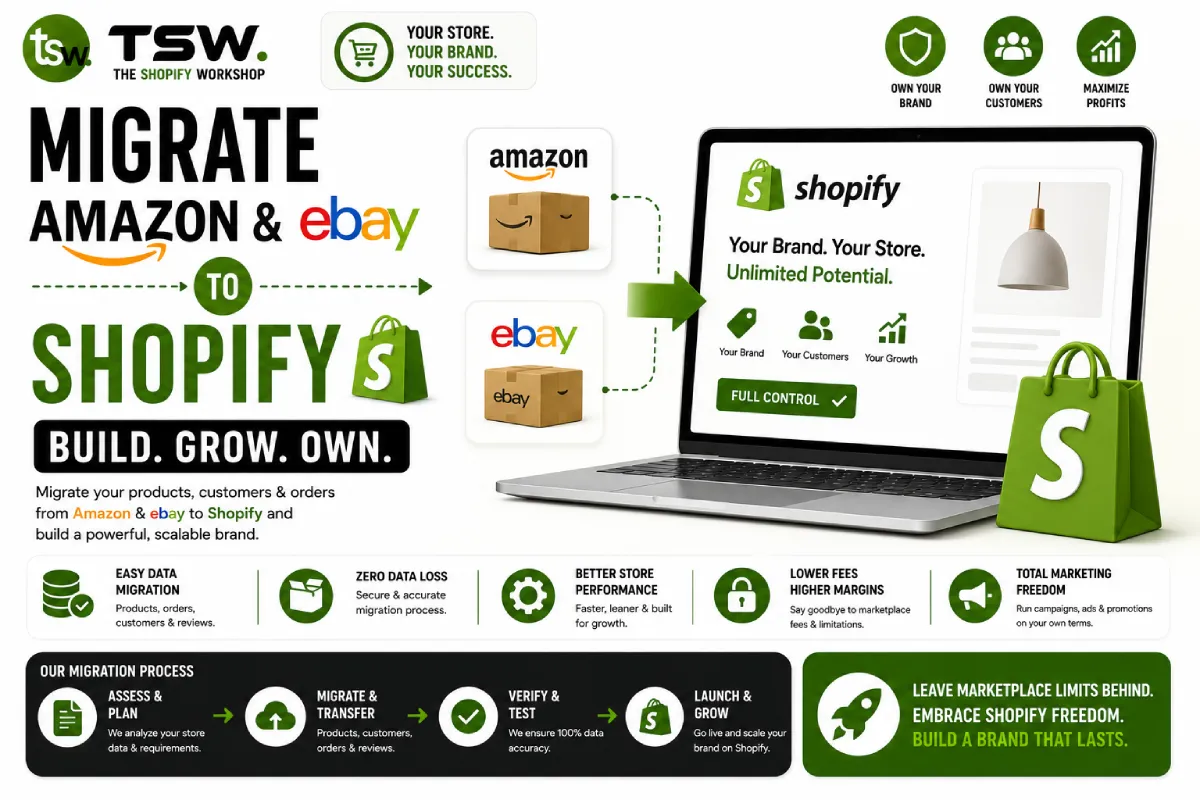
Selling on Amazon and eBay gives you access to massive audiences, but you are playing by their rules. Rising fees, algorithm changes, and zero brand ownership make it risky to rely solely on marketplaces. Building your own custom Shopify store gives you full control over pricing, branding, and customer relationships.
The Hidden Costs of Marketplace Dependency
Between referral fees (8-15%), FBA fees, and advertising costs, many sellers lose 30-40% of revenue to platform charges. With Shopify, your transaction costs drop significantly while you build a direct relationship with customers that no algorithm change can take away.
Step-by-Step Migration Process
1. Audit Your Current Product Catalogue
Before migrating, catalogue every product with its SKU, pricing, images, and descriptions. Use a spreadsheet or product information management (PIM) tool to organise everything. This is the foundation of a clean migration.
2. Export Product Data
Amazon Seller Central and eBay both allow CSV exports. Download your product listings, order history, and customer data (where permitted). Our Shopify migration services include automated data mapping to eliminate manual errors.
3. Set Up Your Shopify Store
Choose a plan that matches your volume. Shopify Basic works for most small sellers, while high-volume merchants benefit from Shopify Plus features like custom checkout and automation. Invest in a custom theme that reflects your brand identity.
4. Import Products and Configure Settings
Use Shopify’s native import tool or apps like Matrixify for complex catalogues. Map your categories, variants, and metafields carefully. Set up tax rules, shipping zones, and payment gateways before going live.
5. Redirect and Launch
Set up 301 redirects from any existing website URLs. Configure your SEO settings including meta titles, descriptions, and structured data. Run a soft launch with existing customers before scaling marketing.
Maintaining Marketplace Presence Post-Migration
You do not have to abandon marketplaces entirely. Many successful brands use a hybrid approach — selling on Amazon for discovery while driving repeat customers to their Shopify store. Tools like ChannelEngine help sync inventory across all channels.
Building Your Direct-to-Consumer Channel
Invest in digital marketing including email, social media, and PPC advertising to drive traffic directly to your store. The lifetime value of a direct customer far exceeds marketplace buyers.
Common Migration Pitfalls to Avoid
- Losing SEO equity: Always implement proper redirects and maintain URL structures where possible
- Ignoring customer communication: Notify existing customers about the move and offer incentives to shop direct
- Rushing the launch: Test thoroughly including checkout, payment processing, and mobile responsiveness
- Forgetting analytics: Set up Google Analytics 4, Meta Pixel, and conversion tracking before launch
Ready to break free from marketplace dependency? Get in touch with our migration specialists for a free assessment of your current setup and a tailored migration plan.