What Are Hydrogen and Oxygen?
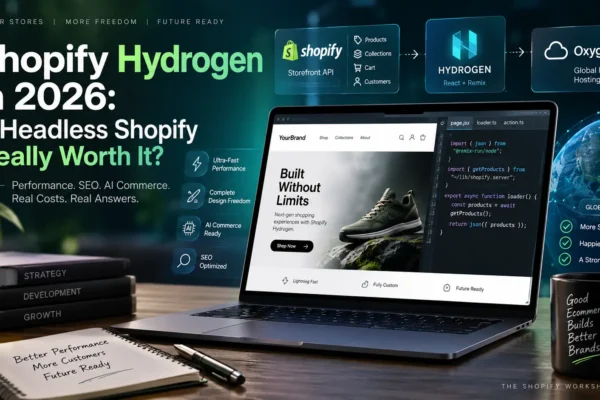
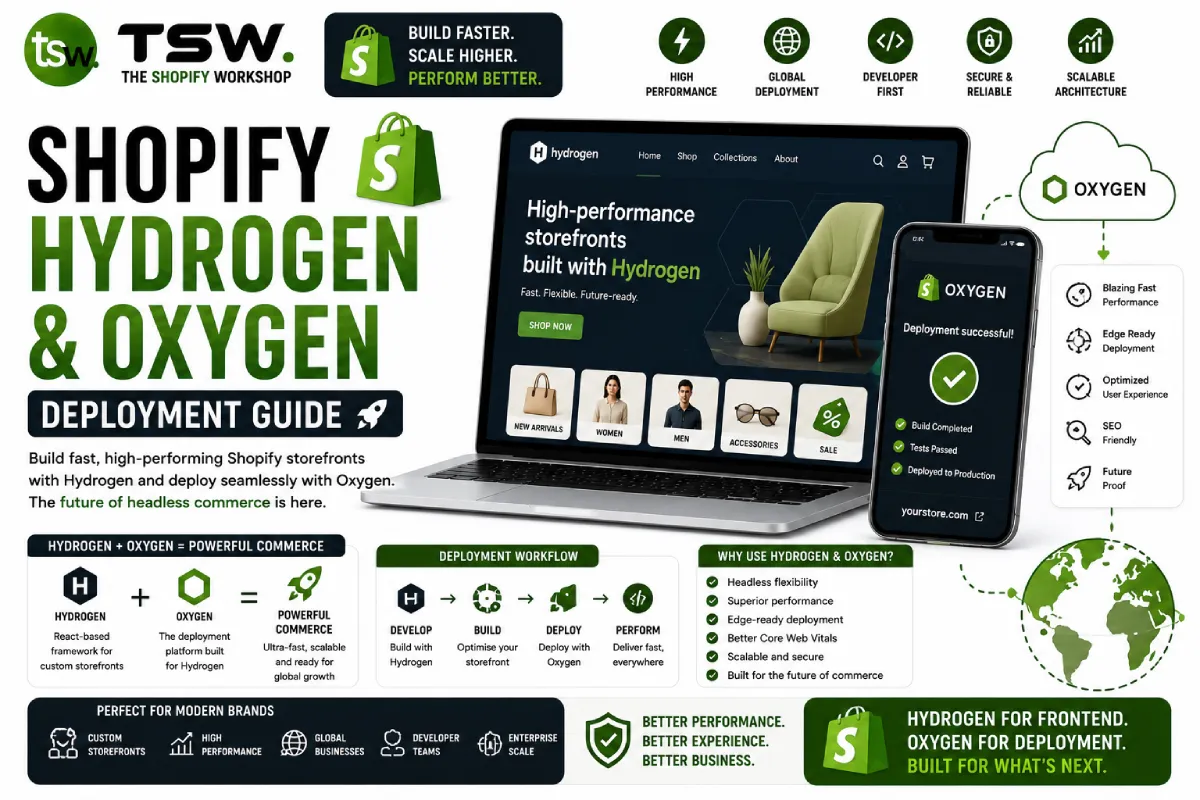
Shopify Hydrogen is a React-based framework purpose-built for headless commerce, while Oxygen is Shopify’s global hosting platform that deploys Hydrogen storefronts at the edge. Together, they eliminate the complexity of managing separate frontend infrastructure while maintaining the speed advantages of headless architecture.
Unlike generic hosting solutions, Oxygen integrates directly with the Shopify Storefront API, providing optimised data fetching, built-in caching, and zero-config deployments that keep your store blazing fast worldwide.
Why Choose Hydrogen + Oxygen Over Traditional Themes?
Traditional Liquid themes are powerful, but Hydrogen unlocks capabilities that aren’t possible with server-rendered Liquid. Client-side interactivity, component-level caching, streaming server-side rendering, and full creative freedom over the shopping experience make Hydrogen ideal for brands that need a competitive edge.
With Oxygen handling deployment, you get Shopify’s global CDN, automatic SSL, preview environments for every Git branch, and seamless integration with Shopify’s checkout — no third-party hosting bills or DevOps overhead.
Key Architecture Benefits
Hydrogen uses React Server Components to stream HTML from the edge, dramatically reducing time to first byte. The framework includes built-in commerce primitives — cart, product, collection components — so you’re not rebuilding common patterns from scratch. Combined with Shopify’s performance infrastructure, page loads consistently hit sub-second thresholds.
Setting Up Your First Hydrogen Project
Getting started requires Node.js 18+ and a Shopify partner account. The Hydrogen CLI scaffolds a complete project with routing, data loading, and Storefront API integration pre-configured. Run npm create @shopify/hydrogen and select your preferred template to generate a production-ready starting point.
The project structure separates routes, components, and data queries cleanly. Each route file exports a loader function for data fetching and a default component for rendering — a pattern familiar to anyone who’s worked with Remix or Next.js.
Connecting to Your Shopify Store
Hydrogen connects to your store through the Storefront API using a public access token. Configure this in your environment variables, and every GraphQL query automatically targets your store’s product catalogue, collections, and content. The framework includes typed query helpers that provide autocompletion and validation for Shopify’s GraphQL schema.
Deploying to Oxygen
Deployment is as simple as pushing to your connected GitHub repository. Oxygen builds your project, deploys it to edge workers worldwide, and provides a preview URL for every branch. Production deployments happen automatically when you merge to your main branch — no CI/CD configuration required.
For brands requiring custom storefront experiences with enterprise-grade hosting, the Hydrogen + Oxygen combination delivers the best of both worlds: developer flexibility with Shopify reliability.
Performance Optimisation on Oxygen
Oxygen provides built-in caching strategies at the edge. Use CacheShort, CacheLong, and CacheNone helpers to control how long responses are cached per route. Product pages with infrequent updates can cache aggressively, while cart and account pages bypass the cache entirely.
Monitor performance through Oxygen’s built-in analytics dashboard, which shows request latency, cache hit rates, and error rates across all edge locations. This visibility helps you identify bottlenecks before they impact customers.
When Hydrogen + Oxygen Makes Sense
This stack is ideal for brands doing over £1M in annual revenue that need differentiated shopping experiences, complex product customisation flows, or multi-brand storefronts. Smaller stores are typically better served by Online Store 2.0 themes, which offer excellent performance with lower development costs. Consult our strategy team to determine the right approach for your business.